Bear on the Boat 3D Paper Cut SVG: A Designer's Review
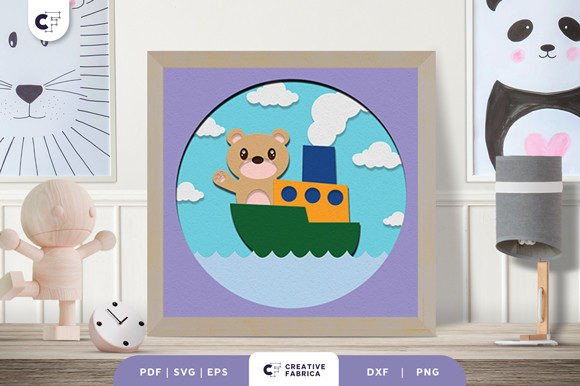
When I first opened the Bear on the Boat 3D Paper Cut SVG, my initial reaction wasn't just about the cuteness factor, though that is certainly high. As a designer who spends hours staring at screens and hooping fabric, I look for structural integrity and visual storytelling. This design, categorized under Fantasy And Fairy Tales, immediately struck me as a piece that bridges the gap between digital artistry and tactile craftsmanship. The concept of a teddy bear steering a vessel is timeless, but the execution here leans heavily into a layered, shadow-box aesthetic that demands careful consideration before it hits the embroidery machine.
First Impressions and Visual Personality
The layout of this 3D SVG file suggests a depth that is often hard to achieve in standard flat embroidery. The lines are clean, and the separation between the bear, the boat, and the background elements implies a deliberate use of layering. For an embroidery project, this means we aren't just looking at a simple satin stitch outline; we are looking at potential fill stitches that need to play nicely with each other to create that illusion of dimension. The mood is whimsical yet grounded, making it perfect for nursery decor or children's apparel where you want something charming but not overly infantile.
What stands out most is the "paper cut" style. In a digital format, this looks crisp. Translating this to thread requires a keen eye for stitch density. If the layers are too dense, the fabric will pucker; if they are too sparse, the "shadow" effect gets lost. My advice is to treat this less like a standard applique design and more like a complex composition where negative space is just as important as the thread coverage.
Real-World Application: The Custom Tote Scenario
To truly test the viability of the Bear on the Boat 3D Paper Cut SVG, I imagined a specific client request: a custom embroidered tote bag for a baby shower gift. Tote bags are popular handmade products for Etsy sellers and small shop owners because they are practical and highly visible. However, canvas or heavy cotton tote fabric can be tricky.
In this scenario, the bear needs to pop against a natural or colored canvas. If I were stitching this for a small shop product, I would likely choose a high-contrast thread palette. Imagine a navy blue boat against a cream bear on a tan bag. The 3D SVG structure allows the boat to feel like it is floating slightly above the fabric surface if stitched with the right underlay. For a personalized gift, adding the child's name in a simple running stitch below the boat would complete the look without cluttering the main design. The result would be a finished product that feels boutique-quality rather than mass-produced.
Apparel and Textile Considerations
Moving beyond totes, let's consider custom apparel. A sweatshirt is an excellent candidate for this design. The thicker fabric of a hoodie or crewneck can support the weight of the stitching required to mimic the paper-cut layers. Sweatshirt embroidery often suffers from designs getting lost in the fleece texture, but the bold shapes in this machine embroidery design should hold up well.
However, caution is needed with stretchy fabrics. If you attempt this on a thin t-shirt, the stabilizer choice becomes critical. Without a robust cut-away stabilizer, the intricate corners of the boat and the bear's ears could distort after the first wash. For baby embroidery on onesies, I would recommend scaling the design down significantly and ensuring the stitch count isn't too high, as baby skin is sensitive to rough, dense stitching on the inside of the garment.
Technical Challenges and Fabric Compatibility
While the Bear on the Boat 3D Paper Cut SVG is visually stunning, it is not without its technical hurdles. Designers must be wary of using this on dark fabrics unless the file includes specific compensation for light threads showing through gaps, or if you plan to use a light-colored backing fabric as part of an appliqué technique. The "paper cut" style often relies on sharp, internal corners. On a curved surface like a cap, these details can become problematic. The curvature of the front panel might cause the thread to bridge across small gaps, ruining the crisp definition of the boat's hull.
Furthermore, products that require frequent washing, such as kitchen towels or aprons, need extra scrutiny. High stitch density areas can become stiff and uncomfortable over time. If you are creating a holiday embroidery item meant to be heirloom-quality, test the design on scrap fabric first. Run it through a few wash cycles to see how the threads react to agitation. Does the bear's ear curl? Does the boat lose its shape? These are the questions that separate a hobbyist project from a professional commercial embroidery asset.
Enhancing Brand Value and Customer Trust
For creative entrepreneurs and craft business owners, the quality of your design assets directly impacts your brand consistency. Using a well-thought-out file like this can elevate your printable mockup presentations and actual listings. When a customer sees a clean, dimensional design on your Etsy listing, it signals professionalism. It tells them you care about the details. Conversely, a poorly executed version of this design—with puckering or thread breaks—can damage customer trust instantly.
The visual appeal of the Bear on the Boat 3D Paper Cut SVG lies in its ability to tell a story. It's not just a bear; it's an adventurer. This narrative quality increases buyer engagement. People buy stories as much as they buy products. Whether it's for a wedding gift (perhaps for a couple who loves sailing) or a holiday gift for a new parent, the emotional connection drives the sale.
Practical Notes for the Embroidery Designer
Before committing to a full production run or a high-stakes client order, here are my practical recommendations for working with this file:
- Test on Scrap: Always stitch a sample on the exact fabric you intend to use. Fabric texture changes how threads lay.
- Check Contrast: Review your thread colors in black and white mockups first to ensure the layers distinguish themselves clearly.
- Stabilizer Strategy: Don't skimp on stabilizer. For this level of detail, a medium-to-heavy weight cut-away is often safer than tear-away.
- Hoop Size Verification: Confirm the design fits your available hoop size without needing to re-hoop, which can lead to alignment issues in multi-layer designs.
- Licensing Check: Since this is a digital file, always verify the license terms. Can you sell the finished product? Can you sell the digital embroidery file itself? Never assume; always read the terms provided by the creator.
- Density Review: If the design feels too stiff after stitching, consider editing the fill density in your embroidery software if you have the skills and the right file format.
In conclusion, the Bear on the Boat 3D Paper Cut SVG is a versatile and charming addition to any designer's library. It fits naturally into the Fantasy And Fairy Tales genre but has the structural robustness to work on modern custom apparel and home goods. With the right preparation, attention to fabric choice, and respect for the technical limitations of embroidery machines, this design can transform simple textiles into cherished keepsakes. It is a reminder that even in a digital age, the magic of a well-stitched, three-dimensional story still captivates us all.