Japanese Pagoda 3D SVG for Countries Content
As a digital publisher who has spent years refining the visual identity of various content platforms, I approach every new graphic design asset with a critical eye. It is not enough for an image to simply look good; it must perform. It needs to stop the scroll on social media, establish immediate context in a blog header, and maintain crisp quality across devices. Recently, I evaluated the Japanese Pagoda 3D Shadow Box SVG for potential inclusion in a travel and culture-focused editorial project. This piece stands out as a sophisticated tool for creators looking to elevate their web design and editorial design standards.
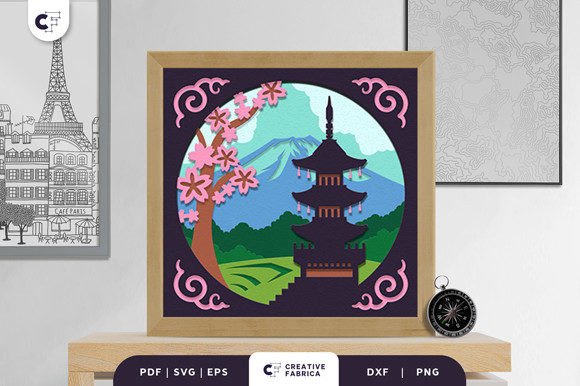
Upon first inspection, the Japanese Pagoda 3D Shadow Box SVG exudes a sense of calm authority and artistic depth. Unlike flat icons that can sometimes feel generic or overly simplistic, this asset utilizes layered intricacy to create a tangible sense of dimension. The design captures the essence of a traditional landmark, translating complex architecture into a clean, scalable vector format. For a publisher, this translates to immediate visual credibility. When a reader lands on a page featuring this graphic, they instantly perceive the content as curated and high-quality. The mood is distinctly educational yet inviting, making it perfect for niches focused on travel, history, mindfulness, or Asian culture within the broader Countries category.
Elevating Editorial Layouts and Blog Graphics
The true test of any design asset is its versatility within a real publishing workflow. I envision the Japanese Pagoda 3D Shadow Box SVG serving as a cornerstone for various blog graphics. Imagine using it as the central focal point for a website header on an article discussing the history of Kyoto or the spiritual significance of temple architecture. Because it is a 3D SVG, it retains sharpness regardless of scaling, ensuring that your visual hierarchy remains intact whether viewed on a retina desktop monitor or a mobile phone.
Beyond standard article headers, this asset shines in the realm of Pinterest pin creation. Pinterest is a visual search engine where aesthetic appeal directly correlates to click-through rates. The shadow box effect provides just enough texture to stand out against the sea of flat photography often found on the platform. By placing this graphic alongside bold typography in a Canva template, you can create pins that feel like premium digital products rather than simple blog links. This approach strengthens brand identity, signaling to your audience that your content offers depth and value.
Strategic Applications for Content Marketing
For those engaged in affiliate marketing or selling digital downloads, the utility of this file extends even further. Consider creating a digital guide or an eBook about traveling in Japan. The Japanese Pagoda 3D Shadow Box SVG could serve as the cover art or a chapter divider, adding a touch of elegance that justifies a higher price point. Similarly, it works beautifully as a watermark or seal of quality on printable design resources, such as itinerary planners or cultural study worksheets.
In terms of content marketing, consistency is key. Using this asset across your social media graphics, newsletter headers, and category thumbnails creates a cohesive visual language. When a subscriber sees that familiar pagoda silhouette in their inbox, they immediately recognize the sender, fostering trust and increasing open rates. It acts as a visual anchor, tying together disparate pieces of content into a unified small business branding strategy.
Performance and Reader Perception
Why does a specific graphic like this matter for performance? In the crowded digital landscape, reader trust is fragile. A pixelated or poorly chosen image can undermine even the most well-researched article. The Japanese Pagoda 3D Shadow Box SVG counters this by projecting professionalism. Its intricate layers suggest attention to detail, a quality readers subconsciously transfer to your written content. This leads to a stronger first impression and better category recognition. When users associate your site with high-quality creative design, they are more likely to linger, explore, and convert.
Furthermore, the asset supports better click-through potential. In A/B testing scenarios for ad creatives or social posts, images with depth and clear subject matter often outperform abstract or cluttered visuals. The pagoda is instantly recognizable, allowing the viewer to grasp the topic of the content within milliseconds. This clarity is essential for effective commercial design where every second of attention counts.
Practical Implementation and Cautionary Notes
While the Japanese Pagoda 3D Shadow Box SVG is a powerful tool, it must be used with intention. It works best in hero images, article thumbnails, and as an accent in editorial layouts where it has room to breathe. However, caution is advised when using it in very small mobile thumbnails where the intricate layers might blur into a indistinct shape. It may also feel out of place in strictly corporate or ultra-minimalist niches that require a stark, text-only aesthetic. Additionally, avoid placing it on busy, low-contrast backgrounds where the shadow effects could get lost.
Before integrating this into your live site or commercial license protected products, I recommend a rigorous testing protocol. Preview the SVG on both desktop and mobile screens to ensure the layers render correctly. Test it against various typography styles—pair it with a classic serif for an academic feel, a clean sans serif for modernity, or a handwritten font for a personal travel journal vibe. Check the file size to ensure it doesn't impact your page load speed, and always compress images appropriately for web delivery. Finally, verify the licensing terms from the creative marketplace where you acquired it to confirm it covers your specific use case, whether that be a monetized blog, an affiliate landing page, or a paid course.
In conclusion, the Japanese Pagoda 3D Shadow Box SVG is more than just a decorative element; it is a strategic asset for the serious publisher. By leveraging its depth, cultural resonance, and scalability, you can transform ordinary content into a visually compelling experience that resonates with audiences and drives engagement.